Digital Transformation Framework for Traditional Industries: A Practical 2026 Roadmap
Chitradip Pramanik
•
March 18, 2026
Digital Transformation
Entering the Era of Value Orchestration
As of March 2026, the industrial sector has moved beyond the era of fragmented digital "pilots." We have entered the stage of Value Orchestration, where technology, talent, and governance operate as a single, synchronised system. For traditional, asset-intensive industries like mining, construction, manufacturing, oil and gas, and energy, the stakes have never been higher. Volatile commodity prices, skyrocketing material costs (with construction goods tariffs reaching a 40-year high of 30% in 2025), and a shrinking specialised labour pool (a deficit of nearly 500,000 workers in construction alone) have made digital transformation an existential necessity.
This roadmap provides a structured methodology for navigating this complexity. We examine the transition from legacy manual processes to predictive, self-optimising operations using the Reactore 4DFramework and the Devum™ Industrial Application Development Platform (IADP). By leveraging pre-built components for real-time 3D digital twins and map-based visibility, industrial leaders can unlock valuation premiums of up to 67% over their non-digital peers.1
1. Why Traditional Industries Require a Dedicated Framework in 2026
Traditional industries operate in high-stakes, 24/7 environments where a software failure isn't just a "bug", it is a potential safety catastrophe, an environmental disaster, or a multi-million-dollar production halt. Generic digital transformation strategies designed for retail or fintech fail in industrial environments because they do not account for Operational Technology (OT) systems like SCADA, PLCs, and distributed sensor networks.
The 2026 Industrial Reality Check
Traditional sectors face unique "friction points" that demand a specialised methodology:
High Capital Intensity: Rigs, ball mills, and haulage fleets represent decades of investment. Digitalisation must extend the life of these assets rather than replace them.
Safety Critical Constraints: Underground mining and high-pressure refining have zero tolerance for error. Digital twins must provide millisecond-accurate safety simulations and real-time hazard monitoring.
The Connectivity Gap: Remote operations in "GPS-denied" environments, such as deep mines or offshore rigs, often lack stable fibre or 5G. Platforms must support secured offline-mode operations that sync data the moment a connection is restored.
Data Sovereignty and Geopatriation: Organisations are increasingly moving workloads from global public clouds to more localised or sovereign environments to mitigate geopolitical risk.
A dedicated framework provides the "integration glue" needed to bridge these gaps, turning isolated data points into a unified Single Source of Truth for the entire enterprise.
2. Digital Maturity Model for Asset Intensive Industries
Before building a roadmap, organisations must benchmark their current state. In 2026, digital maturity is no longer just about "having tech"; it is about how deeply that technology is embedded in the decision-making cycle.3
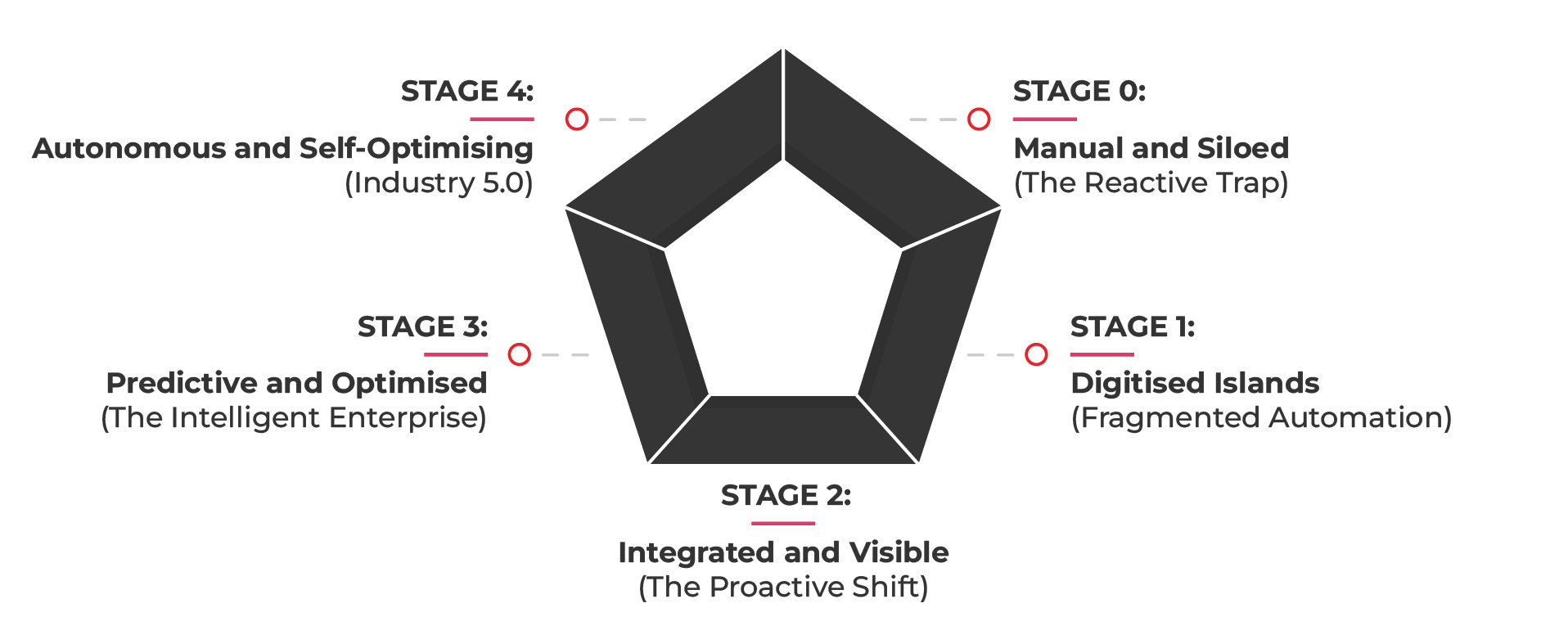
Stage 0: Manual and Siloed (The Reactive Trap)
At this stage, operations are dominated by paper logs, radio calls, and manual spreadsheets. Data is retrospective and management only learns about a machine failure or safety breach 24 hours after it occurs. This leads to "data disputes" where different departments present conflicting numbers for the same shift.
2026 best practices dictate a "Pilot and Pivot" approach to validate technologies before full-scale rollout.
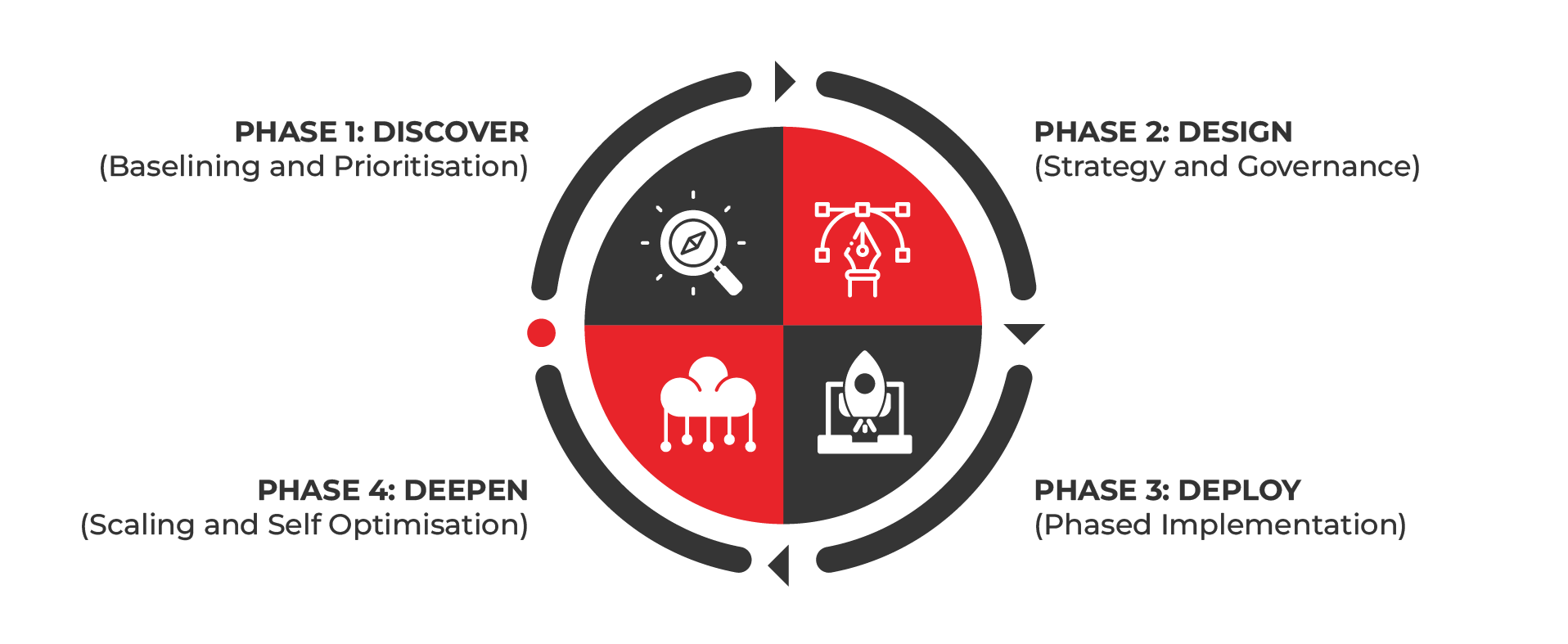
Map-based Visibility: Start with 2D/3D map interfaces to track asset movement and geofence-based safety zones. This provides immediate value to field supervisors.
Workflow Automation: Digitalising manual shift handovers using an IADP’s visual design canvas. By allowing domain experts to participate in software creation, development time is reduced by 50-70%.
Phase 4: Deepen (Scaling and Self Optimisation)
Once a pilot proves ROI, the focus shifts to scaling across the entire enterprise value chain.
3D Digital Twins: Implement high-fidelity virtual replicas for immersive simulation and "what-if" scenario testing.
Agentic AI: Deploy autonomous AI agents to manage complex tasks like refinery control adjustments or grid load balancing. Gartner predicts that by the end of 2026, 40% of large enterprises will use agentic systems to manage workflows.
4.1. Pre-built Industrial Components for Rapid Scaling
Unlike generic builders, Devum™ provides specialised, ready-to-use building blocks that minimise the "lost in translation" problem between business experts and developers:
Real-time 3D Digital Twins: Devum™ enables the creation of high-fidelity virtual replicas of factories, mines, or refineries. These twins synchronise with live IoT sensor data to provide spatial intelligence and real-time equipment health monitoring.9
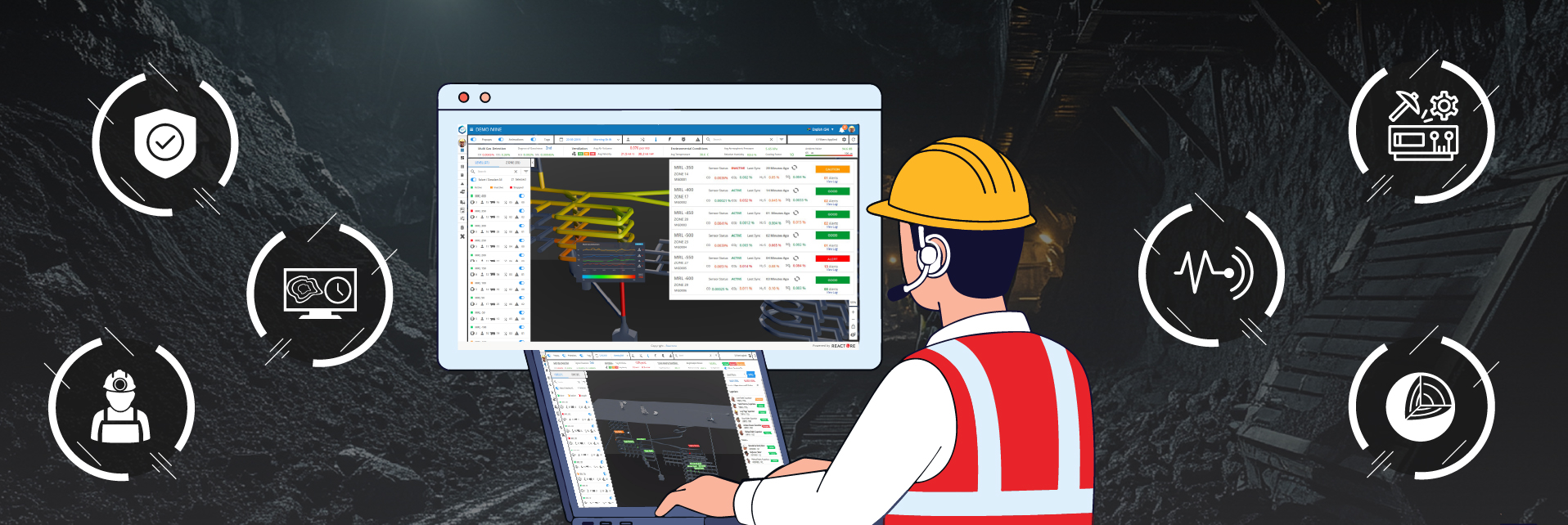
Map-based Operational Dashboards: For sectors like mining and construction, Devum's geospatial interface allows for the tracking of all location-related data. Supervisors can monitor fleet movement, manage geofenced safety alerts, and respond to events across thousands of acres of remote land in real-time.
Automated Workflow Engine: Using a visual design canvas, organisations can compose complex process diagrams and embed these workflows directly into their applications. This achieves seamless automation for mission-critical processes such as shift handovers, safety incident reporting, and compliance tracking.9
Advanced KPI and Logic Builder: Devum™ provides pre-built app logic elements and pseudocode that allow teams to create sophisticated algorithms for predictive maintenance and production efficiency without manual backend coding.10
Domain-driven Data Modelling: Instead of generic tables, Devum™ allows users to conceptualise relational data tables that align specifically with industrial entities (e.g., specific drill rigs, haul trucks, or refinery vessels).10
AI-assisted Development (DevBot): Devum’s generative AI assistant, DevBot, assists with configuration tasks and executing complex database building requirements, reducing development time by up to 90% for certain applications.
4.2. IADP vs. Generic Low-Code: The Competitive Edge
By democratising development, Devum™ allows mine managers and site engineers to be the primary visionaries of their software. This increases developer output exponentially and empowers "citizen developers" to actively participate in building enterprise-grade solutions.11
5. Real-time 3D and Map-based Digital Twins: The New Operational Layer
In 2026, the digital twin is no longer a static "model"; it is an Operating Layer. It provides the spatial intelligence necessary to manage vast, complex sites remotely.
5.1. The Architecture of a 3D Industrial Digital Twin
A robust industrial twin functions across five distinct layers:
Physical Layer: The actual equipment (e.g., a ball mill or a drill rig).
Data Capture Layer: IoT sensors and reality capture (LiDAR, photogrammetry) gathering raw geometry and physical data.6
Connectivity Layer: Standard protocols (MQTT/Sparkplug) transmitting data to a centralised processing system.8
Modelling and Analytics Layer: Building a 3D model that mirrors the asset's behaviour and applying AI to forecast failures.
Visualisation and Interaction Layer: An interactive 3D/Map GUI where operators can zoom into equipment for granular insights and managers visualise KPIs spatially.
5.2. Map-based Twins for Large-scale Assets
For construction and mining, "Map-based" digital twins are critical. Supervisors can:
Track Fleet Movement: View haul truck positions in real-time on a geospatial site map.
Monitor Safety Zones: Use geofencing to trigger alerts if a worker enters a high-risk blast zone.
Environmental Monitoring: Visualise air quality and water levels across thousands of acres of remote land.
6. Industry Specific Roadmaps and ROI Benchmarks
6.1. Mining: Pit-to-Port Optimisation
The 2026 mining sector is intensifying automation to address margin pressures.
The Problem: Fragmented systems lead to data trapped in silos (Dispatch vs. Geological models).
The Solution: MineOne™, built on Devum™, integrates data across the entire mining value chain.
ROI Benchmark: A major iron ore mine achieved a 160% increase in annual sales (3.85M to 10M tonnes) and a 50% reduction in turnaround time through RFID-based dispatch automation.
Each additional technology adopted in construction correlates to a $1.14 million revenue uplift for a business generating $100 million in revenue.4
The Problem: Poor visibility of equipment movement and workforce allocation across multiple sites.
The Solution: Map-based dashboards and mobile-first safety apps to track project progress in real-time.
ROI Benchmark: Construction companies embracing digital transformation see a 15% average increase in productivity and a 6% reduction in costs.
6.3. Manufacturing: The Self Optimising Factory
Manufacturers are moving from pilot cells to plant-wide rollouts of "Smart Manufacturing."
The Problem: Unplanned downtime (costing up to $125,000 per hour) and quality defects.
The Solution: 3D digital twins for predictive maintenance and "Golden Batch" analytics.
ROI Benchmark: Smart factory technologies deliver production efficiency gains of 28-35% and reduce quality defects by 41%.1
6.4. Oil and Gas: Asset Integrity and Remote Operations
The global digital oilfield market is projected to reach $34.03 billion by 2028.
The Problem: Remote offshore platforms are difficult and dangerous to inspect manually.
The Solution: 3D digital twins for remote inspections and Agentic AI for pipeline leak detection.
ROI Benchmark: Operators report a 15-20% reduction in unplanned downtime and significantly lower insurance liabilities.
6.5. Energy: Grid Digitalisation and Smart Operations
The 2026 energy sector faces decarbonisation, reliability, and affordability pressures while modernising grids for renewables.
The Problem: Legacy SCADA and manual inspections create blind spots, slowing fault response and renewable integration.
The Solution: 3D digital twins, smart meter monitoring, and AI‑enabled energy management systems, built via platforms like Devum™ for outage management and predictive maintenance.
ROI Benchmark: Smart grids deliver up to 20% lower energy consumption, 30% higher reliability, and 25% reduced maintenance costs.
7. Overcoming Barriers: Security, Skills, and Culture
Even with a powerful IADP like Devum™, transformation stalls if the foundational "soft" architecture is neglected.2
7.1. Cybersecurity Mesh in the OT Space
As industrial assets connect to the cloud, cyberattacks on OT systems (SCADA, PLCs) have surged 60% in the last year.
Best Practice: Adopt a Cybersecurity Mesh approach, which decentralises security controls and embeds them into the applications and identities themselves.
Compliance: Ensure platforms are ISO 27001:2022 and ISO 9001:2015 certified to maintain data integrity.
7.2. Bridging the Skills Gap via Democratisation
Traditional development cannot scale fast enough to meet the demand for industrial apps.
Solution: Use IADPs to empower Citizen Developers, business analysts and engineers who build solutions without writing code. This captures institutional knowledge before experienced workers retire.
7.3. Governance and the Operating Model
Transformation is not a one-time project; it is a repeatable capability.
Standardise Data Products: Standardised data improves "time-to-insight" by 35%.
Leadership Ownership: Success requires co-creation where engineers, operators, and finance teams share accountability for digital KPIs.
8. Your Practical 90-day Implementation Plan for 2026
If you are responsible for digital transformation, follow this focused 90-day plan to build momentum without overcommitting.
Days 1-30: Assessment and Data Hub Setup
Conduct a digital maturity assessment across key operations.
Catalogue "Shadow IT" (manual logs/spreadsheets) and identify data owners.
Select an Industrial Application Development Platform (IADP) like Devum™ to serve as your integration backbone.
Days 31-60: Use Case Design and Governance
Identify 2-3 high-impact use cases (e.g., OEE monitoring or predictive asset health).
Establish your Transformation Office and confirm ROI metrics.
Map the data integration path from legacy SCADA/PLC sensors to your IADP using protocols like MQTT.8
Days 61-90: Pilot Deployment and Workforce Training
Deploy an integrated, map-based pilot solution at one site or department.
Use immersive 3D simulations to train field personnel in a risk-free environment.
Measure results against the baseline, document lessons, and draft the enterprise-wide scale-up plan.7
FAQs: Industrial Digital Transformation and Digital Maturity
1. What is the best framework for industrial digital transformation in 2026?
The Reactore 4D Framework (Discover, Design, Deploy, Deepen) is the most practical choice for traditional industries. It combines digital maturity assessment with a phased, risk-aware implementation roadmap that ensures every technology investment is tied to operational ROI.
2. How does an Industrial Application Development Platform (IADP) differ from low-code?
Generic low-code focuses on basic business UI. An IADP like Devum™ is an industrial powerhouse built for high-velocity sensor data, OT/IT integration, and mission-critical workflows. It includes pre-built components specifically for 3D digital twins and geospatial map dashboards that generic tools lack.
3. Why is "map-based visibility" critical for construction and mining?
In vast, remote environments, spatial context is essential. Map-based dashboards allow supervisors to track thousands of acres, monitor asset movement in real-time, and manage geofenced safety alerts, significantly reducing turnaround times and safety incidents.
4. What is the financial ROI of a 3D digital twin?
Organisations report a 30% reduction in unplanned downtime, 25% lower maintenance OPEX, and up to 35% higher production yields. Furthermore, companies with high digital maturity enjoy a 67% valuation premium over competitors.1
5. How often should we update our digital maturity assessment?
Assessments should be conducted annually or after major project completions. Because technology (like Agentic AI and Physical AI) moves exponentially, an annual refresh ensures your roadmap remains aligned with current market capabilities.
Conclusion: Becoming a "Digital Champion" in 2026
In 2026, digital transformation is no longer a luxury, it is an existential imperative. By adopting a structured framework and leveraging a specialised Industrial Application Development Platform (IADP) like Devum™, your organisation can transition from reactive, siloed operations to a proactive, integrated powerhouse.
The path from "Manual and Siloed" to "Autonomous and Self-Optimising" is now well-charted. The only remaining question is: how fast can you move?
Reactore MineOne isn’t just a software platform; it’s a game-changer. It transformed our mining operations, making them more efficient, cost-effective, and sustainable. We highly recommend Reactore MineOne to any mining company looking to stay ahead in this competitive industry.
Andrew Coleman
Chief Operations Officer
Global Minerals Corporation
Book a Demo
Experience Minone First-hand!
Thank you! Your submission has been received!
Oops! Something went wrong while submitting the form.
Devum saved our team time and money! Before Devum, software development was slow and expensive. Devum's low-code platform cut development time in half and lowered costs. Their easy-to-use platform and helpful support got us up and running quickly. Now we can focus on innovation and launch products we once thought impossible. Devum is more than just software, it's a partner that helped our business grow.
Alex Rivera
Chief Technology Officer
Innova Digitalisation Systems
Request a FREE Trial
Join the Low-code Revoultion Now. Claim Your FREE Trial!
Thank you! Your submission has been received!
Oops! Something went wrong while submitting the form.
RAMJACK Technology Solutions Having worked closely with the Reactore team over the past 5 years I can attest to their proactive, ‘can-do’ attitude. Not only is the MineOne platform an incredibly powerful tool for the mining industry; the team’s focus on the client’s specific requirements drives closer engagements and a longer lasting relationship. Reactore is fundamental in bringing together and visualising technology integration into a difficult environment
Rupert Birch
Vice President EMENA
RAMJACK Technology Solutions
Get in Touch
Join Hands for a Digital Transformation journey with Reactore!
Thank you! Your submission has been received!
Oops! Something went wrong while submitting the form.
Our partnership with Reactore, established in 2015, has been instrumental in designing and implementing innovative mining compliance systems. Their seamless approach translates complex regulations into user-friendly solutions, ensuring a smooth journey from concept to real-world application. This collaboration has consistently benefited LCS by allowing us to deliver superior value to our clients. Their ability to convert complex concepts into solutions that appear simple to the end user really is the ultimate sophistication!
Jaco Swartz
Managing Director
LCS (Pty.) Ltd.
Become a Partner
Join Our Partner Network
Thank you! Your submission has been received!
Oops! Something went wrong while submitting the form.